Antimicrobial resistance (AMR): from wonder drugs to worrisome bugs – a review
Keywords:
Antimicrobial resistance (AMR), ESKAPE pathogens, Antibiotics, Antimicrobial stewardshipAbstract
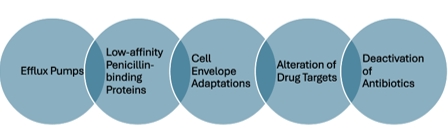
Antimicrobial resistance (AMR) represents a significant and escalating global health challenge, threatening the efficacy of treatments for infectious diseases. This review explores the complex dynamics underlying the emergence and proliferation of AMR, emphasizing the mechanisms by which microbes evade antimicrobial agents. Key contributors include the misuse and overuse of antibiotics in clinical, agricultural, and community settings, compounded by insufficient development of novel antimicrobial drugs. Particular attention is paid to the ESKAPE pathogens, Enterococcus faecium, Staphylococcus aureus, Klebsiella pneumoniae, Acinetobacter baumannii, Pseudomonas aeruginosa, and Enterobacter spp. as critical drivers of nosocomial infections. Resistance mechanisms such as altered drug targets, efflux pumps, and enzymatic deactivation are discussed in detail, alongside the diminishing efficacy of frontline antibiotics like methicillin, vancomycin, and carbapenems. The review also highlights the urgent need for multifaceted strategies to curb AMR. These include antimicrobial stewardship programs, enhanced surveillance, periodic antibiotic rotation, and the integration of advanced diagnostic technologies like artificial intelligence for resistance detection and drug design. Non-prescription antibiotic regulation, improved hygiene practices, and innovations in vaccination and alternative therapies are underscored as pivotal interventions. The document concludes with a call to action for collaborative global efforts involving policymakers, healthcare providers, and the public to mitigate the AMR crisis effectively. This comprehensive examination offers valuable insights into the challenges and potential solutions for safeguarding the future of antimicrobial therapy.
Downloads
References
1. World Health Organization: WHO. 2023. Antimicrobial resistance. https://www.who.int/news-room/fact-sheets/detail/antimicrobial-resistance [Accessed 11 Apr. 2024].
2. Michael CA, Dominey-Howes D, Labbate M. The antimicrobial resistance crisis: causes, consequences, and management. Front Public Health. 2014;2:145. doi: 10.3389/fpubh.2014.00145.
3. Kunhikannan S, Thomas CJ, Franks AE, Mahadevaiah S, Kumar S, Petrovski S. Environmental hotspots for antibiotic resistance genes. Microbiologyopen. 2021;10(3):e1197. doi: 10.1002/mbo3.1197.
4. Diwan V, Tamhankar AJ, Khandal RK, Sen S, Aggarwal M, Marothi Y, et al. Antibiotics and antibiotic-resistant bacteria in waters associated with a hospital in Ujjain, India. BMC Public Health. 2010;10:414. doi: 10.1186/1471-2458-10-414.
5. ICMR - Antimicrobial Resistance Surveillance Network. Annual report: January 2021 to December 2021. https://main.icmr.nic.in/sites/default/files/upload_documents/AMR_Annual_Report_2021.pdf
6. Santajit S, Indrawattana N. Mechanisms of Antimicrobial Resistance in ESKAPE Pathogens. Biomed Res Int. 2016;2016:2475067. doi: 10.1155/2016/2475067.
7. García-Solache M, Rice LB. The Enterococcus: a Model of Adaptability to Its Environment. Clin Microbiol Rev. 2019;32(2):e00058-18. doi: 10.1128/CMR.00058-18.
8. Krawczyk B, Wityk P, Gałęcka M, Michalik M. The Many Faces of Enterococcus spp.-Commensal, Probiotic and Opportunistic Pathogen. Microorganisms. 2021;9(9):1900. doi: 10.3390/microorganisms9091900.
9. Kristich CJ, Rice LB, Arias CA. Enterococcal Infection - Treatment and Antibiotic Resistance. In: Gilmore MS, Clewell DB, Ike Y, Shankar N, eds. Enterococci: From Commensals to Leading Causes of Drug Resistant Infection. Boston: Massachusetts Eye and Ear Infirmary; 2014.
10. Miller WR, Munita JM, Arias CA. Mechanisms of antibiotic resistance in enterococci. Expert Rev Anti Infect Ther. 2014;12(10):1221-36. doi: 10.1586/14787210.2014.956092.
11. Arias CA, Contreras GA, Murray BE. Management of multidrug-resistant enterococcal infections. Clin Microbiol Infect. 2010;16(6):555-62. doi: 10.1111/j.1469-0691.2010.03214.x.
12. Levitus M, Rewane A, Perera TB. Vancomycin-Resistant Enterococci. In: StatPearls. Treasure Island (FL): StatPearls Publishing; 2024. Available from: https://www.ncbi.nlm.nih.gov/books/NBK513233/
13. Tigabu A, Getaneh A. Staphylococcus aureus, ESKAPE Bacteria Challenging Current Health Care and Community Settings: a Literature Review. Clin Lab. 2021;67(7). doi: 10.7754/Clin.Lab.2020.200930.
14. Mlynarczyk-Bonikowska B, Kowalewski C, Krolak-Ulinska A, Marusza W. Molecular Mechanisms of Drug Resistance in Staphylococcus aureus. Int J Mol Sci. 2022;23(15):8088. doi: 10.3390/ijms23158088.
15. Lee AS, de Lencastre H, Garau J, Kluytmans J, Malhotra-Kumar S, Peschel A, Harbarth S. Methicillin-resistant Staphylococcus aureus. Nat Rev Dis Primers. 2018;4:18033. doi: 10.1038/nrdp.2018.33.
16. Turner NA, Sharma-Kuinkel BK, Maskarinec SA, Eichenberger EM, Shah PP, Carugati M, et al. Methicillin-resistant Staphylococcus aureus: an overview of basic and clinical research. Nat Rev Microbiol. 2019;17(4):203-218. doi: 10.1038/s41579-018-0147-4.
17. Mühlberg E, Umstätter F, Kleist C, Domhan C, Mier W, Uhl P. Renaissance of vancomycin: approaches for breaking antibiotic resistance in multidrug-resistant bacteria. Can J Microbiol. 2020;66(1):11-16. doi: 10.1139/cjm-2019-0309.
18. Cong Y, Yang S, Rao X. Vancomycin resistant Staphylococcus aureus infections: A review of case updating and clinical features. J Adv Res. 2019;21:169-176. doi: 10.1016/j.jare.2019.10.005.
19. Esposito S, Blasi F, Curtis N, Kaplan S, Lazzarotto T, Meschiari M, et al. New Antibiotics for Staphylococcus aureus Infection: An Update from the World Association of Infectious Diseases and Immunological Disorders (WAidid) and the Italian Society of Anti-Infective Therapy (SITA). Antibiotics. 2023;12(4):742. doi: 10.3390/antibiotics12040742.
20. Maddiboyina B, Roy H, Ramaiah M, Sarvesh CN, Kosuru SH, Nakkala RM, Nayak BS. Methicillin-resistant Staphylococcus aureus: novel treatment approach breakthroughs. Bull Natl Res Cent 2023;47:95. https://doi.org/10.1186/s42269-023-01072-3
21. Ashurst JV, Dawson A. Klebsiella Pneumonia. In: StatPearls. Treasure Island (FL): StatPearls Publishing; 2024.
22. Ballén V, Gabasa Y, Ratia C, Ortega R, Tejero M, Soto S. Antibiotic Resistance and Virulence Profiles of Klebsiella pneumoniae Strains Isolated From Different Clinical Sources. Front Cell Infect Microbiol. 2021;11:738223. doi: 10.3389/fcimb.2021.738223.
23. Karami-Zarandi M, Rahdar HA, Esmaeili H, Ranjbar R. Klebsiella pneumoniae: an update on antibiotic resistance mechanisms. Future Microbiol. 2023;18:65-81. doi: 10.2217/fmb-2022-0097.
24. Kidd TJ, Mills G, Sá-Pessoa J, Dumigan A, Frank CG, Insua JL, et al. A Klebsiella pneumoniae antibiotic resistance mechanism that subdues host defences and promotes virulence. EMBO Mol Med. 2017;9(4):430-447. doi: 10.15252/emmm.201607336.
25. Arato V, Raso MM, Gasperini G, Berlanda Scorza F, Micoli F. Prophylaxis and Treatment against Klebsiella pneumoniae: Current Insights on This Emerging Anti-Microbial Resistant Global Threat. Int J Mol Sci. 2021;22(8):4042. doi: 10.3390/ijms22084042.
26. Bassetti M, Righi E, Carnelutti A, Graziano E, Russo A. Multidrug-resistant Klebsiella pneumoniae: challenges for treatment, prevention and infection control. Expert Rev Anti Infect Ther. 2018;16(10):749-761. doi: 10.1080/14787210.2018.1522249.
27. Zhu W, Tian Y, Xiang L, Cao L, He L. A Case of Multidrug-Resistant Klebsiella pneumoniae Treated with Carrimycin. Infect Drug Resist. 2023;16:2365-2369. doi: 10.2147/IDR.S407076.
28. Howard A, Donoghue M, Feeney A, Sleator RD. Acinetobacter baumannii: an emerging opportunistic pathogen. Virulence. 2012;3(3):243-50. doi: 10.4161/viru.19700.
29. Peleg AY, Seifert H, Paterson DL. Acinetobacter baumannii: emergence of a successful pathogen. Clin Microbiol Rev. 2008;21(3):538-82. doi: 10.1128/CMR.00058-07.
30. Kyriakidis I, Vasileiou E, Pana ZD, Tragiannidis A. Acinetobacter baumannii Antibiotic Resistance Mechanisms. Pathogens. 2021;10(3):373. doi: 10.3390/pathogens10030373.
31. Manchanda V, Sanchaita S, Singh N. Multidrug resistant Acinetobacter. J Glob Infect Dis. 2010;2(3):291-304. doi: 10.4103/0974-777X.68538.
32. Weinberg SE, Villedieu A, Bagdasarian N, Karah N, Teare L, Elamin WF. Control and management of multidrug resistant Acinetobacter baumannii: A review of the evidence and proposal of novel approaches. Infect Prevent Pract. 2020;2:100077. doi: 10.1016/j.infpip.2020.100077.
33. Garnacho-Montero J, Dimopoulos G, Poulakou G, Akova M, Cisneros JM, De Waele J, et al. Task force on management and prevention of Acinetobacter baumannii infections in the ICU. Intensive Care Med. 2015;41(12):2057-75. doi: 10.1007/s00134-015-4079-4.
34. Pseudomonas aeruginosa Infection. Centers for Disease Control and Prevention, 2019, www.cdc.gov/hai/organisms/pseudomonas.html.
35. Recio R, Mancheño M, Viedma E, Villa J, Orellana MÁ, Lora-Tamayo J, Chaves F. Predictors of Mortality in Bloodstream Infections Caused by Pseudomonas aeruginosa and Impact of Antimicrobial Resistance and Bacterial Virulence. Antimicrob Agents Chemother. 2020;64(2):e01759-19. doi: 10.1128/AAC.01759-19.
36. Hwang W, Yoon SS. Virulence Characteristics and an Action Mode of Antibiotic Resistance in Multidrug-Resistant Pseudomonas aeruginosa. Sci Rep. 2019;9(1):487. doi: 10.1038/s41598-018-37422-9.
37. Langendonk RF, Neill DR, Fothergill JL. The Building Blocks of Antimicrobial Resistance in Pseudomonas aeruginosa: Implications for Current Resistance-Breaking Therapies. Front Cell Infect Microbiol. 2021;11:665759. doi: 10.3389/fcimb.2021.665759.
38. Lister PD, Wolter DJ, Hanson ND. Antibacterial-resistant Pseudomonas aeruginosa: clinical impact and complex regulation of chromosomally encoded resistance mechanisms. Clin Microbiol Rev. 2009;22(4):582-610. doi: 10.1128/CMR.00040-09.
39. Kunz Coyne AJ, El Ghali A, Holger D, Rebold N, Rybak MJ. Therapeutic Strategies for Emerging Multidrug-Resistant Pseudomonas aeruginosa. Infect Dis Ther. 2022;11(2):661-682. doi: 10.1007/s40121-022-00591-2.
40. Karruli A, Catalini C, D’Amore C, Foglia F, Mari F, Harxhi A, Galdiero M, Durante-Mangoni E. Evidence-Based Treatment of Pseudomonas aeruginosa Infections: A Critical Reappraisal. Antibiotics. 2023;12(2):399. doi: 10.3390/antibiotics12020399
41. Ramirez D, Giron M. Enterobacter Infections. In: StatPearls. Treasure Island (FL): StatPearls Publishing; 2024. Available from: https://www.ncbi.nlm.nih.gov/books/NBK559296/
42. Partridge SR. Resistance mechanisms in Enterobacteriaceae. Pathology. 2015;47:276-284. doi: 10.1097/PAT.0000000000000237.
43. Ruppé É, Woerther PL, Barbier F. Mechanisms of antimicrobial resistance in Gram-negative bacilli. Ann Intensive Care. 2015;5(1):61. doi: 10.1186/s13613-015-0061-0.
44. Suay-García B, Pérez-Gracia MT. Present and Future of Carbapenem-resistant Enterobacteriaceae (CRE) Infections. Antibiotics. 2019;8(3):122. doi: 10.3390/antibiotics8030122.
45. Ventola CL. The antibiotic resistance crisis: part 1: causes and threats. P T. 2015;40(4):277-83.
46. WHO. Global Antimicrobial Resistance and Use Surveillance System (GLASS) report: 2022. Available at: https://www.who.int/publications/i/item/9789240062702 [Accessed 11 Apr. 2024].
47. Stapleton PD, Taylor PW. Methicillin resistance in Staphylococcus aureus: mechanisms and modulation. Sci Prog. 2002;85(Pt 1):57-72. doi: 10.3184/003685002783238870.
48. Stegger M, Wirth T, Andersen PS, Skov RL, De Grassi A, Simões PM, et al. Origin and evolution of European community-acquired methicillin-resistant Staphylococcus aureus. mBio. 2014;5(5):e01044-14. doi: 10.1128/mBio.01044-14.
49. Wilhelm MP. Vancomycin. Mayo Clin Proc. 1991;66(11):1165-70. doi: 10.1016/s0025-6196(12)65799-1.
50. Selim S. Mechanisms of gram-positive vancomycin resistance (Review). Biomed Rep. 2022;16(1):7. doi: 10.3892/br.2021.1490.
51. Papp-Wallace KM, Endimiani A, Taracila MA, Bonomo RA. Carbapenems: past, present, and future. Antimicrob Agents Chemother. 2011;55(11):4943-60. doi: 10.1128/AAC.00296-11.
52. Meletis G. Carbapenem resistance: overview of the problem and future perspectives. Ther Adv Infect Dis. 2016;3(1):15-21. doi: 10.1177/2049936115621709.
53. Farzam K, Nessel TA, Quick J. Erythromycin. In: StatPearls. Treasure Island (FL): StatPearls Publishing; 2024. Available from: https://www.ncbi.nlm.nih.gov/books/NBK532249/
54. Shivekar S, Menon T. Molecular Basis for Erythromycin Resistance in Group A Streptococcus Isolated From Skin and Soft Tissue Infections. J Clin Diagn Res. 2015;9(11):DC21-3. doi: 10.7860/JCDR/2015/14744.6843.
55. Descheemaeker P, Chapelle S, Lammens C, Hauchecorne M, Wijdooghe M, Vandamme P, et al. Macrolide resistance and erythromycin resistance determinants among Belgian Streptococcus pyogenes and Streptococcus pneumoniae isolates. J Antimicrob Chemother. 2000;45(2):167-73. doi: 10.1093/jac/45.2.167.
56. Murphy PB, Bistas KG, Le JK. Clindamycin. In: StatPearls. Treasure Island (FL): StatPearls Publishing; 2024. Available from: https://www.ncbi.nlm.nih.gov/books/NBK519574/
57. Prabhu K, Rao S, Rao V. Inducible Clindamycin Resistance in Staphylococcus aureus Isolated from Clinical Samples. J Lab Physicians. 2011;3(1):25-7. doi: 10.4103/0974-2727.78558.
58. Andrade FF, Silva D, Rodrigues A, Pina-Vaz C. Colistin Update on Its Mechanism of Action and Resistance, Present and Future Challenges. Microorganisms. 2020;8(11):1716. doi: 10.3390/microorganisms8111716.
59. Sharma J, Sharma D, Singh A, Sunita K. Colistin Resistance and Management of Drug Resistant Infections. Can J Infect Dis Med Microbiol. 2022;2022:4315030. doi: 10.1155/2022/4315030.
60. Friedman ND, Temkin E, Carmeli Y. The negative impact of antibiotic resistance. Clin Microbiol Infect. 2016;22(5):416-22. doi: 10.1016/j.cmi.2015.12.002.
61. de Kraker ME, Davey PG, Grundmann H; BURDEN study group. Mortality and hospital stay associated with resistant Staphylococcus aureus and Escherichia coli bacteremia: estimating the burden of antibiotic resistance in Europe. PLoS Med. 2011;8(10):e1001104. doi: 10.1371/journal.pmed.1001104.
62. Naylor NR, Pouwels KB, Hope R, Green N, Henderson KL, Knight GM, Atun R, Robotham JV, Deeny SR. The health and cost burden of antibiotic resistant and susceptible Escherichia coli bacteraemia in the English hospital setting: A national retrospective cohort study. PLoS One. 2019;14(9):e0221944. doi: 10.1371/journal.pone.0221944.
63. Nekkab N, Astagneau P, Temime L, Crépey P. Spread of hospital-acquired infections: A comparison of healthcare networks. PLoS Comput Biol. 2017;13(8):e1005666. doi: 10.1371/journal.pcbi.1005666.
64. Donker T. Modelling how antimicrobial resistance spreads between wards. Elife. 2020;9:e64228. doi: 10.7554/eLife.64228.
65. Spagnolo F, Cristofari P, Tatonetti NP, Ginzburg LR, Dykhuizen DE. Pathogen population structure can explain hospital outbreaks. ISME J. 2018;12(12):2835-2843. doi: 10.1038/s41396-018-0235-5.
66. Ji Z, Han F, Meng F, Tu M, Yang N, Zhang J. The Association of Age and Antibiotic Resistance of Helicobacter Pylori: A Study in Jiaxing City, Zhejiang Province, China. Medicine. 2016;95(8):e2831. doi: 10.1097/MD.0000000000002831.
67. Ventola CL. The antibiotic resistance crisis: part 1: causes and threats. P T. 2015;40(4):277-83.
68. Uchil RR, Kohli GS, Katekhaye VM, Swami OC. Strategies to combat antimicrobial resistance. J Clin Diagn Res. 2014;8(7):ME01-4. doi: 10.7860/JCDR/2014/8925.4529.
69. Bankar NJ, Ugemuge S, Ambad RS, Hawale DV, Timilsina DR. Implementation of Antimicrobial Stewardship in the Healthcare Setting. Cureus. 2022;14(7):e26664. doi: 10.7759/cureus.26664.
70. Watkins RR. Antibiotic stewardship in the era of precision medicine. JAC Antimicrob Resist. 2022;4(3):dlac066. doi: 10.1093/jacamr/dlac066.
71. van Belkum A, Dunne WM Jr. Next-generation antimicrobial susceptibility testing. J Clin Microbiol. 2013;51(7):2018-24. doi: 10.1128/JCM.00313-13.
72. Pulido MR, García-Quintanilla M, Martín-Peña R, Cisneros JM, McConnell MJ. Progress on the development of rapid methods for antimicrobial susceptibility testing. J Antimicrob Chemother. 2013;68(12):2710-7. doi: 10.1093/jac/dkt253.
73. Morgan DJ, Okeke IN, Laxminarayan R, Perencevich EN, Weisenberg S. Non-prescription antimicrobial use worldwide: a systematic review. Lancet Infect Dis. 2011;11(9):692-701. doi: 10.1016/S1473-3099(11)70054-8.
74. Takesue Y, Nakajima K, Ichiki K, Ishihara M, Wada Y, Takahashi Y, et al. Impact of a hospital-wide programme of heterogeneous antibiotic use on the development of antibiotic-resistant Gram-negative bacteria. J Hosp Infect. 2010;75(1):28-32. doi: 10.1016/j.jhin.2009.11.022.
75. Global Antibiotic Resistance Partnership (GARP) - India Working Group. Rationalizing antibiotic use to limit antibiotic resistance in India. Indian J Med Res. 2011;134(3):281-294.
76. Pittet D. Rôle de hygiene hospitalière dans la réduction de la résistance aux antibiotiques [The role of hospital hygiene in the reduction of antibiotic resistance]. Bull Acad Natl Med. 2004;188(8):1269-80.
77. Ramay BM, Caudell MA, Cordón-Rosales C, Archila LD, Palmer GH, Jarquin C, et al. Antibiotic use and hygiene interact to influence the distribution of antimicrobial-resistant bacteria in low-income communities in Guatemala. Sci Rep. 2020;10(1):13767. doi: 10.1038/s41598-020-70741-4.
78. Masterton R. The importance and future of antimicrobial surveillance studies. Clin Infect Dis. 2008;47 Suppl 1:S21-31. doi: 10.1086/590063.
79. Haenssgen MJ, Xayavong T, Charoenboon N, Warapikuptanun P, Khine Zaw Y. The Consequences of AMR Education and Awareness Raising: Outputs, Outcomes, and Behavioural Impacts of an Antibiotic-Related Educational Activity in Lao PDR. Antibiotics. 2018;7(4):95. doi: 10.3390/antibiotics7040095.
80. Marvasi M, Casillas L, Vassallo A, Purchase D. Educational Activities for Students and Citizens Supporting the One-Health Approach on Antimicrobial Resistance. Antibiotics. 2021;10(12):1519. doi: 10.3390/antibiotics10121519.
81. Silbergeld EK, Graham J, Price LB. Industrial food animal production, antimicrobial resistance, and human health. Annu Rev Public Health. 2008;29:151-69. doi: 10.1146/annurev.publhealth.29.020907.090904.
82. Palma E, Tilocca B, Roncada P. Antimicrobial Resistance in Veterinary Medicine: An Overview. Int J Mol Sci. 2020;21(6):1914. doi: 10.3390/ijms21061914.
83. Potter A, Gerdts V, Littel-van den Hurk Sv. Veterinary vaccines: alternatives to antibiotics? Anim Health Res Rev. 2008;9(2):187-99. doi: 10.1017/S1466252308001606.
84. Callaway TR, Edrington TS, Anderson RC, Harvey RB, Genovese KJ, Kennedy CN, Venn DW, Nisbet DJ. Probiotics, prebiotics and competitive exclusion for prophylaxis against bacterial disease. Anim Health Res Rev. 2008;9(2):217-25. doi: 10.1017/S1466252308001540.
85. Högberg LD, Heddini A, Cars O. The global need for effective antibiotics: challenges and recent advances. Trends Pharmacol Sci. 2010;31(11):509-15. doi: 10.1016/j.tips.2010.08.002.
86. Projan SJ, Shlaes DM. Antibacterial drug discovery: is it all downhill from here? Clin Microbiol Infect. 2004;10 Suppl 4:18-22. doi: 10.1111/j.1465-0691.2004.1006.x.
87. Chinemerem Nwobodo D, Ugwu MC, Oliseloke Anie C, Al-Ouqaili MTS, Chinedu Ikem J, Victor Chigozie U, Saki M. Antibiotic resistance: The challenges and some emerging strategies for tackling a global menace. J Clin Lab Anal. 2022;36(9):e24655. doi: 10.1002/jcla.24655.
88. Islam Z, Kumar P. Inhibitors of riboflavin biosynthetic pathway enzymes as potential antibacterial drugs. Front Mol Biosci. 2023;10:1228763. doi: 10.3389/fmolb.2023.1228763.
89. Kapoor G, Saigal S, Elongavan A. Action and resistance mechanisms of antibiotics: A guide for clinicians. J Anaesthesiol Clin Pharmacol. 2017;33(3):300-305. doi: 10.4103/joacp.JOACP_349_15.
90. Rabaan AA, Alhumaid S, Mutair AA, Garout M, Abulhamayel Y, Halwani MA, et al. Application of Artificial Intelligence in Combating High Antimicrobial Resistance Rates. Antibiotics. 2022;11(6):784. doi: 10.3390/antibiotics11060784.
91. Ji Lv, Senyi Deng, Le Zhang, A review of artificial intelligence applications for antimicrobial resistance. Biosafety Health. 2021;3:22-31. doi: 10.1016/j.bsheal.2020.08.003.
92. Lau HJ, Lim CH, Foo SC, Tan HS. The role of artificial intelligence in the battle against antimicrobial-resistant bacteria. Curr Genet. 2021;67(3):421-429. doi: 10.1007/s00294-021-01156-5.
93. Macesic N, Polubriaginof F, Tatonetti NP. Machine learning: novel bioinformatics approaches for combating antimicrobial resistance. Curr Opin Infect Dis. 2017;30(6):511-517. doi: 10.1097/QCO.0000000000000406.
94. Patel P, Wermuth HR, Calhoun C, et al. Antibiotic. In: StatPearls. Treasure Island (FL): StatPearls Publishing; 2024. Available from: https://www.ncbi.nlm.nih.gov/books/NBK535443/
95. Helmy YA, Taha-Abdelaziz K, Hawwas HAE, Ghosh S, AlKafaas SS, Moawad MMM, et al. Antimicrobial Resistance and Recent Alternatives to Antibiotics for the Control of Bacterial Pathogens with an Emphasis on Foodborne Pathogens. Antibiotics. 2023;12(2):274. doi: 10.3390/antibiotics12020274.
96. Tang KWK, Millar BC, Moore JE. Antimicrobial Resistance (AMR). Br J Biomed Sci. 2023;80:11387. doi: 10.3389/bjbs.2023.11387.
97. Aggarwal R, Mahajan P, Pandiya S, Bajaj A, Verma SK, Yadav P, et al. Antibiotic resistance: a global crisis, problems and solutions. Crit Rev Microbiol. 2024:1-26. doi: 10.1080/1040841X.2024.2313024.
98. Salam MA, Al-Amin MY, Salam MT, Pawar JS, Akhter N, Rabaan AA, Alqumber MAA. Antimicrobial Resistance: A Growing Serious Threat for Global Public Health. Healthcare. 2023;11(13):1946. doi: 10.3390/healthcare11131946.
99. Abushaheen MA, Muzaheed, Fatani AJ, Alosaimi M, Mansy W, George M, et al. Antimicrobial resistance, mechanisms and its clinical significance. Dis Mon. 2020;66(6):100971. doi: 10.1016/j.disamonth.2020.100971.
100. Moo CL, Yang SK, Yusoff K, Ajat M, Thomas W, Abushelaibi A, et al. Mechanisms of Antimicrobial Resistance (AMR) and Alternative Approaches to Overcome AMR. Curr Drug Discov Technol. 2020;17(4):430-447. doi: 10.2174/1570163816666190304122219.
101. Castro-Sánchez E, Moore LS, Husson F, Holmes AH. What are the factors driving antimicrobial resistance? Perspectives from a public event in London, England. BMC Infect Dis. 2016;16(1):465. doi: 10.1186/s12879-016-1810-x.
Downloads
Published
Issue
Section
License
Copyright (c) 2026 Preeti Chandola, Raj K. Keservani, Anuj Nautiyal, Akshi Pundir, Aarushi Marchhal, Rohit Kumar Kesharwani, Abhijeet Ojha (Author)

This work is licensed under a Creative Commons Attribution-NonCommercial 4.0 International License.